
Imagine guests complaining about rodents during their stay, or worse, health inspectors shutting down your kitchen due to pest issues linked to a contractor who promised results but delivered excuses. Poor pest control choices lead to operational chaos, financial penalties, and reputational damage that takes years to repair. This guide walks you through a systematic approach to evaluating and selecting pest control contractors who deliver compliance, reliability, and measurable results, ensuring your London restaurant or hotel maintains the highest standards.
Table of Contents
- Prerequisites: Legal And Compliance Requirements
- Step 1: Verify Qualifications And Certifications
- Step 2: Insist On Detailed Inspection And Reporting
- Step 3: Evaluate Contract Terms And Expected Outcomes
- Step 4: Assess Cost Expectations And Budgeting
- Step 5: Prioritize Eco-Conscious Contractors
- Common Mistakes And Troubleshooting
- Expected Results And Success Metrics
- Choose Biowise For Trusted London Pest Control
- FAQ
Key Takeaways
| Point | Details |
|---|---|
| Legal compliance and BPCA accreditation are critical prerequisites | Verify adherence to UK regulations and industry standards before engaging any contractor. |
| Detailed inspections and clear reporting improve pest identification accuracy by 65% | Comprehensive assessments ensure tailored treatment plans and accountability. |
| Contracts with emergency call-outs reduce infestation resolution time by half | Structured agreements cut resolution from 12 weeks to 6 weeks on average. |
| Transparent pricing boosts client retention by 50% | Clear cost communication builds trust and prevents budget surprises. |
| Eco-conscious IPM methods maintain 90% effectiveness while cutting pesticide use by 70% | Sustainable approaches protect guest safety and enhance brand reputation. |
Prerequisites: Legal and Compliance Requirements
Before you evaluate contractors, understand the legal framework governing pest control in London hospitality. The Health and Safety at Work etc. Act 1974 and Food Safety Act 1990 establish your obligations to maintain pest-free environments. Non-compliance risks fines, closure orders, and legal liability if guests or staff suffer harm from pest-related incidents.
Every contractor you consider must carry valid public liability and professional indemnity insurance. This protects your business from claims if treatments cause property damage or health issues. Request certificates of insurance before signing any agreement.
Membership in the British Pest Control Association (BPCA) signals a contractor’s commitment to professional standards and ongoing training. The BPCA Code of Practice requires members to follow ethical guidelines, use approved methods, and maintain competency through continuing education. BPCA-accredited contractors also align with London EHO Standards, ensuring your venue meets local authority expectations during inspections.
Verify these prerequisites through direct documentation requests:
- Current insurance certificates with coverage amounts clearly stated
- BPCA membership confirmation and member number
- Proof of qualifications for technicians who will service your property
- Evidence of compliance with relevant environmental and health regulations
Skipping this verification step exposes you to contractors who lack proper training, insurance, or regulatory knowledge. These gaps become costly when treatments fail or incidents occur.
Step 1: Verify Qualifications and Certifications
Qualifications separate professionals from amateurs. Start by confirming BPCA accreditation, which demonstrates adherence to industry best practices and commitment to continuous improvement. BPCA-accredited contractors enjoy over 80% client satisfaction among hospitality customers due to reliability and compliance.
Commercial pest control differs significantly from residential work. Your contractor needs proven experience in hospitality environments where food safety, guest comfort, and regulatory compliance intersect. Ask for references from similar establishments and verify their track record with those clients directly.
Technician qualifications matter just as much as company accreditation. Ensure field staff hold relevant pest control certification in London and receive regular training on new methods, products, and regulations. Certified technicians recognize pest species accurately, apply treatments safely, and document work properly.
Request detailed information about:
- Specific hospitality sector experience, including number of hotel and restaurant clients
- Years in operation and continuity of management
- Training programmes for technicians and frequency of skills updates
- Professional memberships beyond BPCA, such as trade associations or specialist groups
Pro tip: Ask contractors to describe their most challenging hospitality pest control case and how they resolved it. Their response reveals problem-solving skills, technical knowledge, and client communication abilities better than any brochure.
Beware contractors who cannot promptly provide documentation or seem evasive about qualifications. Professional operators maintain organized records and share credentials willingly because they understand hospitality managers require proof before committing to partnerships.
Step 2: Insist on Detailed Inspection and Reporting
Accurate pest identification forms the foundation of effective control. Generic treatments waste money and time while allowing infestations to worsen. Thorough inspections improve pest identification accuracy by 65%, enabling targeted interventions that work faster and cost less.
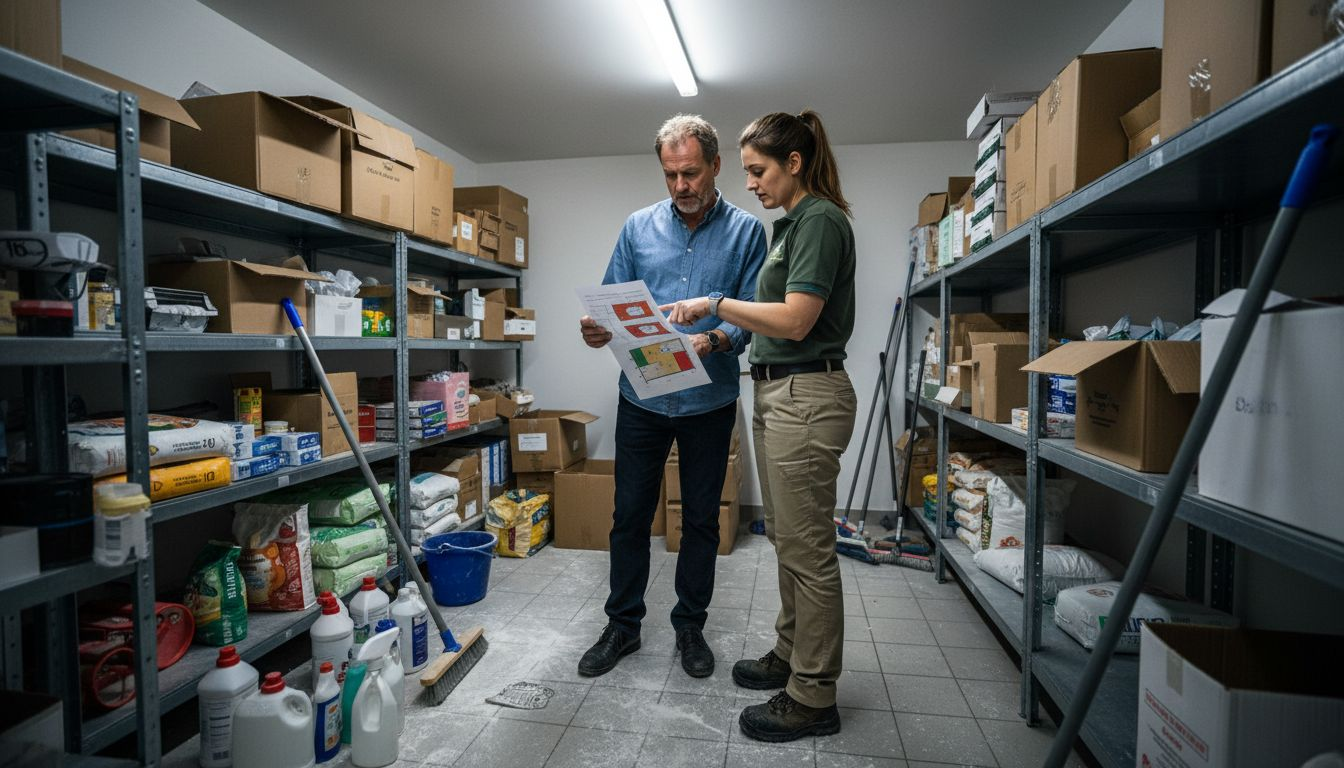
Professional inspections examine every vulnerable area, from kitchen drains and storage rooms to outdoor waste areas and building perimeters. Inspectors identify pest species, assess infestation severity, locate entry points, and evaluate conditions attracting pests. This comprehensive approach reveals problems you might miss during daily operations.
Demand written reports after every inspection and treatment visit. Quality reports include photographs, pest activity maps, treatment details, and specific recommendations for improving sanitation or structural repairs. These documents create accountability, track progress over time, and provide evidence of due diligence during health inspections.
Effective reporting includes:
- Clear identification of pest species with evidence photographs
- Severity assessment and infestation trends over time
- Treatment methods applied, including product names and application sites
- Follow-up actions required and timelines for completion
- Recommendations for preventive measures and facility improvements
Regular reporting keeps you informed and engaged in pest management rather than discovering problems only when guests complain. Use reports to monitor contractor performance and hold them accountable for results. If reports become vague or inconsistent, your contractor may be cutting corners.
Detailed documentation also supports your kitchen hygiene for hotels protocols by identifying sanitation issues contributing to pest problems, creating opportunities for operational improvements beyond pest control.
Step 3: Evaluate Contract Terms and Expected Outcomes
Contract structure determines service reliability and accountability. Well-drafted agreements specify visit frequency, response times for emergencies, reporting standards, and performance metrics. Proper contracts reduce infestation resolution from 12 weeks to 6 weeks by ensuring consistent attention and rapid intervention when problems arise.
Monthly maintenance visits provide the backbone of commercial pest control. Regular inspections catch emerging issues before they escalate, maintain protective barriers, and demonstrate ongoing diligence to health inspectors. Your contract should clearly state visit frequency and what each visit includes.
Emergency response capabilities prove crucial when unexpected infestations threaten operations. Contracts must specify maximum response times for urgent calls, typically within 24 hours for hospitality venues. Confirm whether emergency services incur additional fees or fall within your standard agreement.
Pro tip: Negotiate service level agreements that include response time guarantees with financial penalties if the contractor misses commitments. This ensures pest emergencies receive priority attention.
Key contract elements to evaluate:
- Scheduled visit frequency and duration
- Emergency call-out response times and availability
- Reporting format, detail level, and delivery timeline
- Performance metrics and resolution timelines for different pest types
- Cancellation terms, notice periods, and early termination fees
- Insurance requirements and liability limitations
- Price adjustment terms and conditions for additional services
Review pest control contract pricing structures carefully to understand what standard fees cover versus additional charges. Some contractors quote low base prices but add fees for every extra service, while others offer comprehensive packages with predictable costs.
| Contract Feature | Impact on Service Quality |
|---|---|
| Monthly visits | Catches emerging issues early |
| 24-hour emergency response | Prevents operational disruptions |
| Detailed reporting | Creates accountability and compliance documentation |
| Performance guarantees | Ensures results or contract remedies |
Understand contract duration and renewal terms. Annual contracts provide cost stability but may lock you into underperforming service. Consider starting with shorter initial terms that extend automatically based on satisfactory performance.
Step 4: Assess Cost Expectations and Budgeting
Realistic budgeting prevents financial surprises and helps you evaluate contractor quotes fairly. Average London pest control visits cost £60 to £120 depending on property size, pest types, and service scope. Annual maintenance contracts for restaurants and hotels typically range from £500 to several thousand pounds based on complexity and visit frequency.
Transparent pricing leads to 50% higher client retention by building trust and eliminating misunderstandings about costs. Quality contractors provide detailed quotes breaking down service components, making it easy to compare offerings and understand what you receive for your investment.
Budget considerations should account for:
- Property size in square metres and number of treatment zones
- Pest pressure based on location, building age, and operational factors
- Visit frequency required for adequate protection
- Emergency service availability and associated costs
- Additional services like proofing, sanitation consulting, or specialist treatments
Avoid selecting contractors solely on lowest price. Cut-rate services often involve rushed inspections, cheaper products, poorly trained technicians, and inadequate follow-up. These false economies lead to recurring infestations, health violations, and ultimately higher costs when you hire competent contractors to fix problems.
“Investing in quality pest control protects your reputation and bottom line. The cost of prevention pales compared to expenses from health violations, guest complaints, or temporary closures.”
Request detailed London pest control cost breakdown information showing exactly what each service includes. Compare quotes on equal terms by ensuring similar visit frequencies, reporting standards, and service scope. Ask about payment terms, whether contracts require upfront payments, and if discounts apply for longer commitments.
Build contingency budget for potential intensive treatments if inspections reveal serious issues. Addressing underlying problems costs more initially but prevents endless cycles of temporary fixes.
Step 5: Prioritize Eco-Conscious Contractors
Guests increasingly expect businesses to demonstrate environmental responsibility. Sustainable pest control protects their health, supports your brand values, and often performs better than traditional chemical-heavy approaches. IPM reduces pesticide use by 70% while maintaining 90% effectiveness and lowers guest complaints by 35%.
Integrated Pest Management combines multiple strategies including exclusion, sanitation improvements, monitoring, and targeted treatments only when necessary. This approach minimizes chemical exposure, reduces environmental impact, and creates lasting solutions by addressing root causes rather than just symptoms.
Humane pest control methods matter to ethically-minded guests and staff. Modern contractors use live capture for certain species, quick-kill traps that minimize suffering, and deterrents that encourage pests to relocate rather than poisoning them. These methods align with animal welfare expectations while effectively protecting your premises.
Evaluate contractors’ environmental commitments by asking about:
- IPM programme implementation and specific non-chemical methods employed
- Product selection criteria prioritizing low-toxicity and eco-friendly options
- Staff training on sustainable pest management techniques
- Waste disposal practices for pest remains and treatment materials
- Certifications or recognition for environmental stewardship
Sustainability enhances your brand reputation and differentiates your establishment in competitive markets. Promoting your partnership with eco-conscious pest contractors London appeals to environmentally-aware guests and demonstrates corporate responsibility.
| Approach | Chemical Use | Effectiveness | Guest Complaint Rate |
|---|---|---|---|
| Traditional chemical-intensive | 100% baseline | 85-90% | Moderate |
| Integrated Pest Management | 30% of baseline | 90-95% | 35% lower |
Environmental regulations continue tightening. Contractors using sustainable methods help you stay ahead of regulatory changes while meeting current requirements. Ask how they adapt practices as new products and regulations emerge.
Common Mistakes and Troubleshooting
Learning from others’ errors saves you from costly experiences. Hospitality managers frequently make preventable mistakes when selecting pest contractors, leading to service failures and operational disruptions.
Failing to verify emergency response capabilities affects 40% of managers who assumed contractors would respond urgently without explicit agreements. When serious infestations arise on busy weekends or holidays, these businesses face dangerous delays while contractors prioritize other clients.
Skipping insurance verification creates liability exposure in roughly 25% of cases where problems occur. If uninsured contractors cause property damage or health issues through negligent treatment application, your business bears financial responsibility for claims.
Ignoring detailed reporting requirements leads to accountability problems and repeated infestations. Without documentation, you cannot track treatment effectiveness, demonstrate compliance to inspectors, or hold contractors responsible for poor results. This oversight allows underperforming service to continue unchecked.
Pro tip: Create a contractor evaluation checklist covering all critical requirements discussed in this guide. Use it consistently when reviewing proposals to ensure nothing important gets overlooked during busy selection processes.
Common pitfalls to avoid:
- Selecting contractors based solely on lowest quotes without evaluating qualifications or service quality
- Failing to read contract fine print regarding additional fees, cancellation terms, and service limitations
- Neglecting to check references from similar hospitality establishments
- Overlooking eco-conscious methods that guests increasingly expect
- Accepting vague service descriptions instead of detailed scope documentation
Address service problems promptly when they arise. If pest issues persist despite regular treatments, demand detailed explanations and action plans from your contractor. Quality providers investigate failures, adjust approaches, and communicate transparently about challenges. Contractors who make excuses or blame you for sanitation issues without offering solutions should be replaced.
Visit the pest control mistakes and solutions blog for additional insights on avoiding common pitfalls and optimizing pest management programmes.
Expected Results and Success Metrics
Realistic expectations help you evaluate contractor performance fairly and recognize when changes are needed. Professional pest control delivers measurable improvements within specific timeframes when proper methods are applied consistently.
Well-structured contracts reduce average infestation resolution from 12 weeks to approximately 6 weeks by ensuring regular attention and rapid response to emerging issues. This timeline varies based on pest species, infestation severity, and facility cooperation with recommendations.
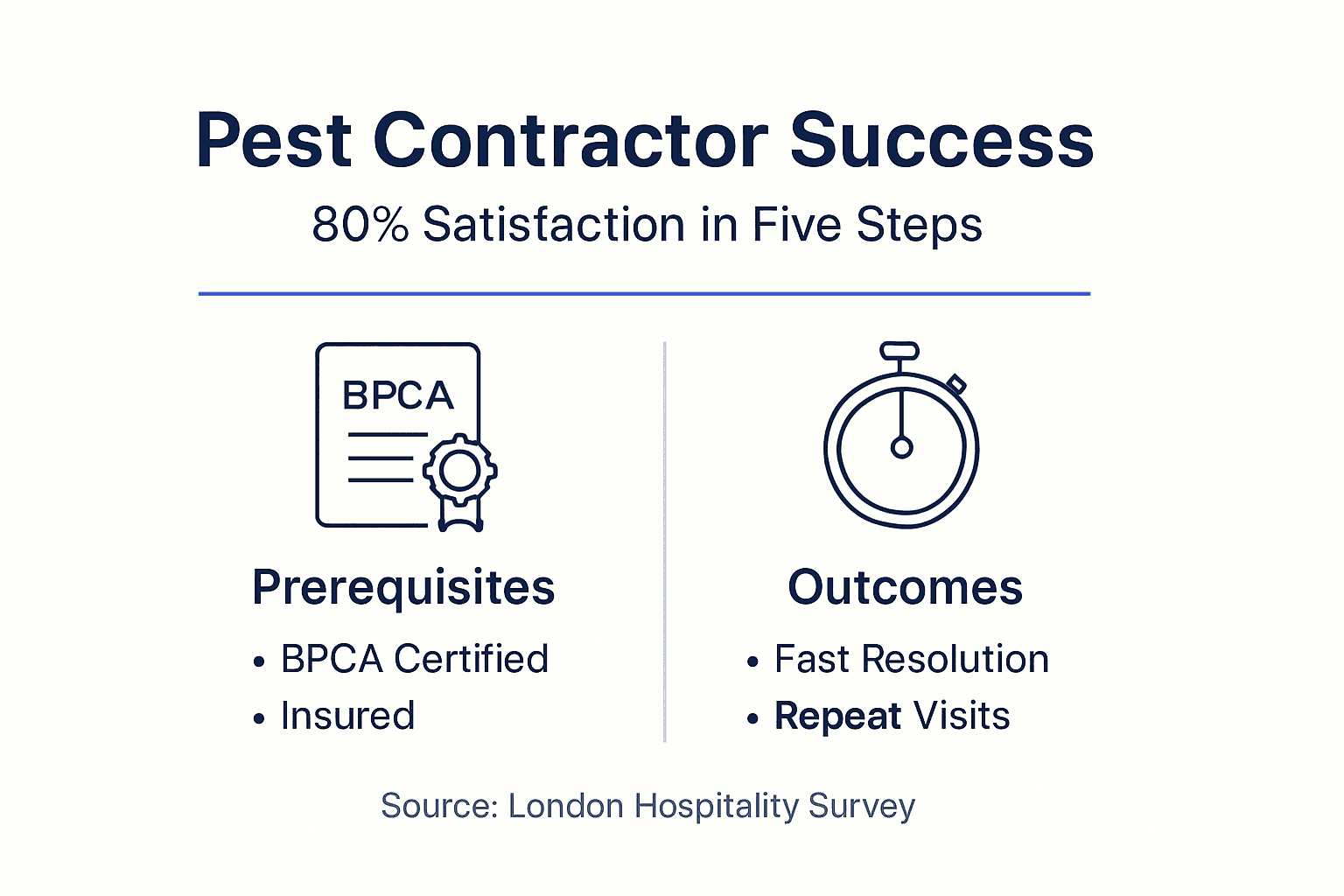
Detailed inspections improve pest identification accuracy by 65% compared to superficial assessments. Accurate identification enables targeted treatments that work faster and cost less than trial-and-error approaches.
Transparent communication and pricing boost client retention by 50% because hospitality managers appreciate predictability and honesty. Contractors who explain their methods, share findings openly, and deliver consistent pricing earn long-term partnerships.
Humane and sustainable practices reduce guest complaints by 35% by eliminating concerns about chemical exposure, animal cruelty, and environmental impact. These methods support positive brand perception while delivering effective pest control.
Verified insurance coverage prevents financial risks from treatment accidents or negligence. This protection proves invaluable during the rare incidents that can devastate uninsured businesses.
Track performance using these metrics:
- Pest activity trends showing declining sightings and evidence over time
- Response times for scheduled visits and emergency calls
- Report quality, detail, and timeliness
- Communication responsiveness to your questions and concerns
- Compliance documentation supporting health inspection preparation
| Success Metric | Target Improvement | Typical Timeline |
|---|---|---|
| Infestation resolution | 50% faster | 6 weeks vs. 12 weeks |
| Pest identification accuracy | 65% improvement | Immediate |
| Client retention | 50% increase | Annual measurement |
| Guest complaints | 35% reduction | 3-6 months |
Document baseline conditions before starting new contracts to measure improvements accurately. Regular review meetings with contractors keep communication strong and address concerns before they become serious problems.
Monitor pest management success metrics relevant to your specific operation type and adjust expectations based on seasonal factors, nearby construction, or other variables affecting pest pressure.
Choose BioWise for Trusted London Pest Control
Selecting the right pest control partner protects your guests, reputation, and bottom line. BioWise Services delivers BPCA-accredited London commercial pest control services specifically designed for restaurants and hotels facing unique hospitality challenges.
Our comprehensive contracts include monthly maintenance visits, 24-hour emergency response, and detailed reporting that supports your compliance requirements. Since 2010, we have served over 600 London clients with reliable, professional service backed by proper insurance and certifications.
We prioritize eco-friendly Integrated Pest Management methods that protect guest safety while maintaining effectiveness. Our hotel pest control experts in London understand hospitality operations and work discreetly to minimize disruption. Transparent pricing and clear communication ensure you know exactly what to expect from our partnership. Discover the top signs your business needs professional pest control services and contact BioWise today for a thorough property assessment.
FAQ
Which certifications should I verify before hiring a pest control contractor?
Verify BPCA accreditation, valid public liability and professional indemnity insurance, and compliance with London health regulations. Request documentation upfront including membership numbers, insurance certificates, and technician qualifications to confirm credentials before signing any agreement.
How quickly can I expect pest infestations to be resolved with proper contracts?
Proper contracts with monthly visits and emergency support typically reduce pest resolution from 12 weeks down to about 6 weeks. Timelines vary based on pest species, infestation severity, and facility cooperation with sanitation recommendations, but structured agreements deliver consistently faster results.
Are eco-friendly pest control methods effective for busy hotels and restaurants?
Integrated Pest Management maintains 90% effectiveness while reducing pesticide use by 70% compared to traditional approaches. Humane methods also decrease guest complaints by 35% and support brand reputation, making them highly suitable for hospitality environments where guest perception matters.
What should monthly pest control contracts include for hospitality venues?
Monthly contracts should specify scheduled visit frequency, comprehensive inspection and reporting standards, emergency response times within 24 hours, and clear performance metrics. Include provisions for treatment adjustments based on findings, documentation supporting health inspections, and transparent pricing for standard and additional services.
How do I know if my current pest control contractor is underperforming?
Warning signs include persistent pest sightings despite regular treatments, vague or delayed reporting, slow emergency response, unexplained price increases, and reluctance to answer questions. If infestations are not resolving within expected timeframes or you lack confidence in their methods, request detailed performance reviews or consider alternative contractors.
Recommended
- Top Tips on Finding Which Pest Control Company is Right for You – BioWise Pest Control London
- How To Achieve A 5-Star Food Hygiene Rating – BioWise Pest Control London
- Pest Control Fulham: Should You Choose Local Experts or a Nationwide UK Chain? – BioWise Pest Control London
- Top Signs Your Business Needs Professional Pest Control Services – BioWise Pest Control London