
Managing a restaurant in London means facing the constant challenge of keeping unwanted guests out of your kitchen and dining areas. Effective pest control is much more than a quick fix since every restaurant must protect food safety, property, and reputation while staying compliant with strict British regulations. This guide breaks down the essential pest management terminology you need, highlighting eco-friendly solutions and strategies that support your commitment to both health and sustainability.
| Point | Details |
|---|---|
| Understanding Terminology | Familiarity with essential pest management terminology is crucial for effective communication with pest control professionals. |
| Integrated Pest Management | Implementing an Integrated Pest Management strategy balances effective pest elimination with long-term prevention and ecological responsibility. |
| Regulatory Compliance | Restaurant managers must be aware of pest management regulations to ensure compliance and protect public health. |
| Eco-Friendly Solutions | Embracing eco-friendly pest management techniques can enhance sustainability while maintaining rigorous health and safety standards. |
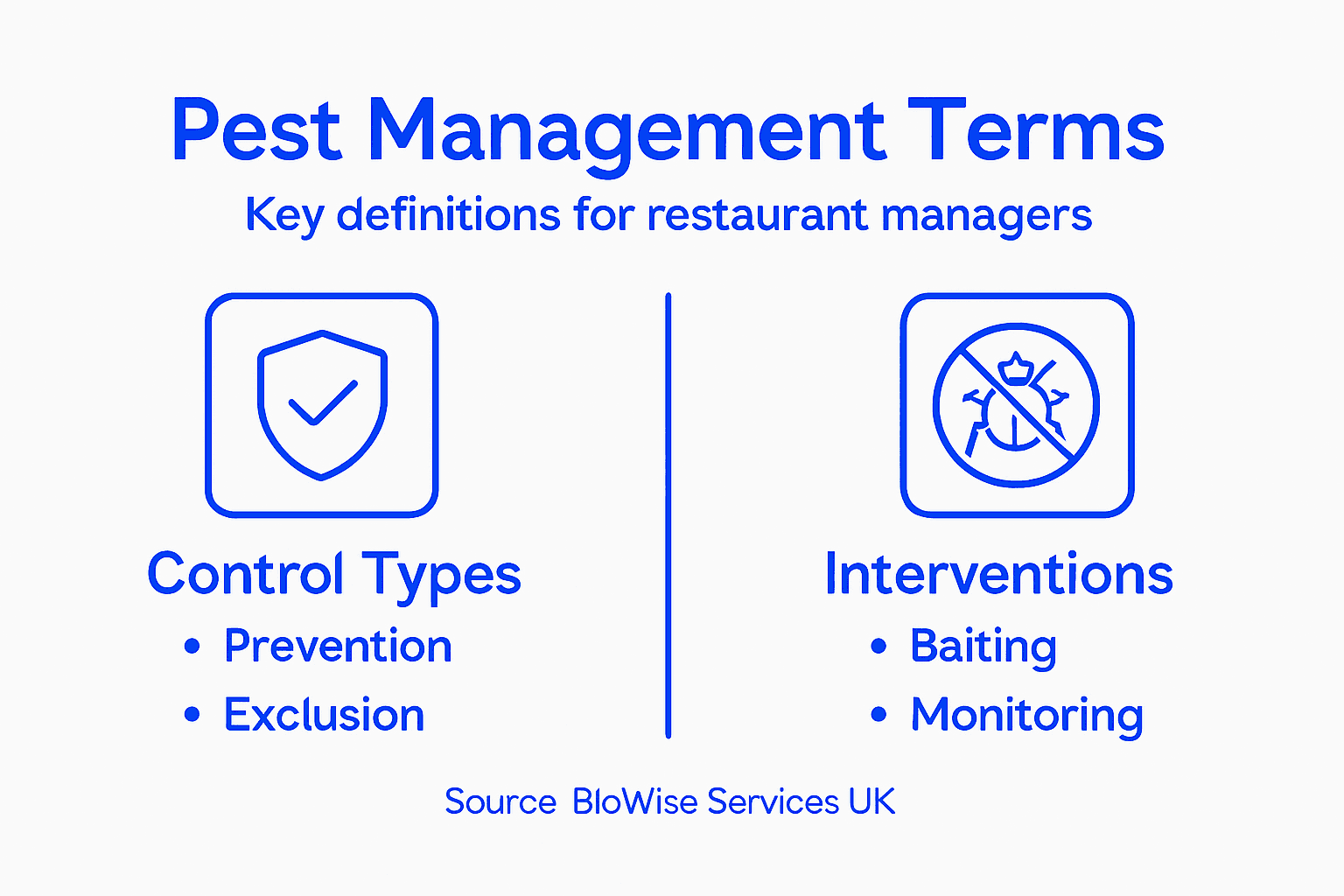
Navigating the world of pest management requires understanding key terminology that defines professional approaches to controlling unwanted organisms in commercial environments like restaurants. Pest management techniques encompass a sophisticated range of strategies designed to prevent, control, and eradicate potential health risks.
In the context of London’s restaurant industry, pest management refers to systematic processes targeting organisms that threaten food safety, property integrity, and customer health. These organisms, scientifically classified as pests, include:
Professional pest control distinguishes between different intervention strategies, each with specific applications and ecological considerations. Environmentally sound practices prioritise methods that minimise ecological disruption while effectively managing potential infestations.
Understanding these terminologies allows restaurant managers to communicate precisely with pest control professionals, ensuring targeted and efficient interventions. Key technical terms include quarantine pests (organisms requiring official control), regulated pests (those subject to governmental management protocols), and vector pests (species capable of transmitting diseases).
Pro tip: Always request comprehensive terminology explanations from your pest management provider to ensure clear communication and precise treatment strategies.
London’s restaurant environments present unique challenges for pest management, with specific urban pests posing significant risks to food safety and business reputation. Rodent infestations represent the most critical threat, capable of causing extensive damage and potential health hazards.
The primary pest categories encountered in restaurant settings include:
Each pest type presents distinctive challenges requiring specialised intervention strategies. Rodents, for instance, can chew through electrical wiring, contaminate food preparation surfaces, and rapidly reproduce in hidden restaurant spaces. Cockroaches pose extreme hygiene risks, potentially spreading bacteria across kitchen environments.
Rapid identification and targeted treatment are crucial for preventing comprehensive pest-related disruptions in food service establishments.
Restaurant managers must understand the specific behavioural patterns and environmental preferences of each pest type. Factors like food availability, moisture levels, temperature, and potential entry points significantly influence pest attraction and colonisation potential.

Pro tip: Conduct monthly comprehensive pest inspections to identify potential vulnerabilities before they transform into full-scale infestations.
Integrated Pest Management (IPM) represents a sophisticated, holistic approach to pest control that goes beyond traditional extermination methods. For London restaurants, IPM offers a comprehensive strategy that balances effective pest elimination with environmental responsibility and long-term prevention.
The key components of an effective IPM strategy include:
Ecological pest management approaches prioritise sustainable solutions that minimise ecosystem disruption. This means restaurant managers must adopt a multi-layered strategy that addresses root causes rather than simply treating symptoms. Successful IPM requires understanding pest behaviour, environmental conditions, and implementing proactive prevention techniques.
IPM is not just about eliminating pests, but creating an environment that naturally discourages their presence.
By integrating multiple control tactics, restaurants can maintain a pest-free environment while reducing reliance on chemical treatments. This approach considers ecological balance, economic feasibility, and long-term sustainability, making it the most intelligent pest management strategy for modern food service establishments.
To assist restaurant managers in selecting the most suitable pest management approach, here is a comparison of traditional pest control and integrated pest management (IPM):
| Criteria | Traditional Pest Control | Integrated Pest Management (IPM) |
|---|---|---|
| Focus | Immediate extermination | Prevention and long-term control |
| Methods | Heavy reliance on chemicals | Combination of physical, biological, and minimal chemical tactics |
| Environmental Impact | Often high, ecological disruption | Low, prioritises ecological balance |
| Documentation | Minimal, transaction-based | Comprehensive, ongoing records |
| Cost Efficiency | Potential for recurring expense | Reduced cost over time, fewer infestations |
Pro tip: Develop a comprehensive IPM documentation system to track pest activities, interventions, and prevention strategies for continuous improvement.
Pest management regulations in the United Kingdom represent a complex framework designed to protect public health, food safety, and environmental sustainability. These legal definitions establish critical guidelines for restaurants, defining specific responsibilities and standards for pest control practices.
Key regulatory terms and classifications include:
Pesticide legislation guidelines emphasise minimising health and environmental risks through comprehensive regulatory frameworks. Restaurant managers must understand these legal definitions to ensure compliance, implementing pest management strategies that align with national and international standards.
Legal compliance in pest management is not just about avoiding penalties, but protecting public health and maintaining professional standards.
The regulatory landscape requires restaurants to maintain detailed documentation, implement preventative measures, and work with licensed pest control professionals. Understanding these legal nuances helps businesses develop robust pest management protocols that meet stringent health and safety requirements.
Pro tip: Maintain a comprehensive legal compliance file documenting all pest management activities, treatments, and professional interventions.
Eco-friendly pest management represents a sophisticated approach that prioritises environmental sustainability and minimises chemical interventions in restaurant settings. These innovative strategies focus on reducing ecological impact while maintaining effective pest control protocols.
Green pest management terminology encompasses several key techniques:
Sustainable pest management approaches emphasise reducing synthetic chemical dependencies through advanced technologies and strategic ecological interventions. These methods not only address immediate pest challenges but also support long-term environmental conservation goals.
Green pest management transcends traditional extermination, focusing on holistic ecosystem balance and minimal intervention.
Restaurant managers can leverage these eco-friendly solutions to demonstrate environmental responsibility while maintaining rigorous health and safety standards. By integrating biological agents, cultural controls, and advanced monitoring technologies, businesses can create comprehensive pest management strategies that protect both their establishments and the broader urban ecosystem.
The following table summarises key eco-friendly pest management techniques and their benefits for London restaurants:
| Technique | Description | Environmental Benefit |
|---|---|---|
| Biological Control | Uses natural predators and beneficial organisms | Reduces chemical usage, preserves local fauna |
| Botanical Pesticides | Plant-based treatment solutions | Rapid biodegradability, minimal pollution |
| Mechanical Methods | Physical barriers and traps | Non-toxic, prevents direct contact with pests |
| Environmental Modification | Adjusting conditions to discourage pests | Supports ecosystem health, long-term reduction |
Pro tip: Collaborate with eco-conscious pest management professionals who can design tailored green interventions specific to your restaurant’s unique environmental context.
Pest management misconceptions frequently lead restaurant managers into ineffective and potentially expensive control strategies. Understanding these common errors can help businesses avoid substantial financial and operational risks associated with inappropriate pest management approaches.
Critical misunderstandings include:
Restaurants often mistakenly view pest control as a transactional service rather than a strategic, continuous process. This approach can lead to recurring infestations, potential health code violations, and significant financial losses from property damage and reputation harm.
Effective pest management is a proactive journey, not a one-time transaction.
Successful pest control requires sophisticated understanding of ecological interactions, precise intervention techniques, and consistent monitoring. Restaurant managers must move beyond simplistic extermination approaches and embrace comprehensive, intelligent pest management strategies that address underlying environmental conditions.
Pro tip: Develop a systematic pest management documentation process that tracks all interventions, environmental conditions, and potential risk factors.
Mastering pest management terminology and strategies is essential for protecting your restaurant’s reputation and health standards. If terms like “integrated pest management” and “regulated pests” seem complex or overwhelming, BioWise Services is here to simplify the process with expert, eco-conscious solutions tailored specifically for London’s busy restaurant environments. Our family-run company has served over 600 satisfied clients since 2010, combining professionalism, reliability, and green practices that align perfectly with the terminology and sustainable approaches discussed.
Do not let common misunderstandings or delayed action put your business at risk. Visit BioWise Services today, explore our specialised commercial pest control solutions, and request a quote to start a comprehensive, compliant, and cost-effective pest management programme. Your restaurant deserves a partner who understands the unique challenges you face — act now to safeguard your premises with confidence.
Pest management involves systematic processes designed to prevent, control, and eradicate pests that pose threats to food safety, property integrity, and customer health within restaurant environments. It is crucial for maintaining hygiene and compliance with health regulations.
Common pests in restaurant settings include rodents (like rats and mice), flying insects (such as house flies and wasps), crawling insects (like cockroaches and ants), and urban wildlife (including pigeons and foxes).
Integrated Pest Management (IPM) focuses on long-term prevention through a combination of techniques, including structural maintenance and minimal chemical intervention, whereas traditional methods often prioritise immediate extermination through heavy reliance on chemicals.
Quarantine pests are organisms that require official control due to their potential threat to public health and significant impacts on the economy. For restaurants, understanding and addressing quarantine pests is essential to ensure compliance with regulations and protect the establishment’s reputation.